
Making a Note-Worthy Start
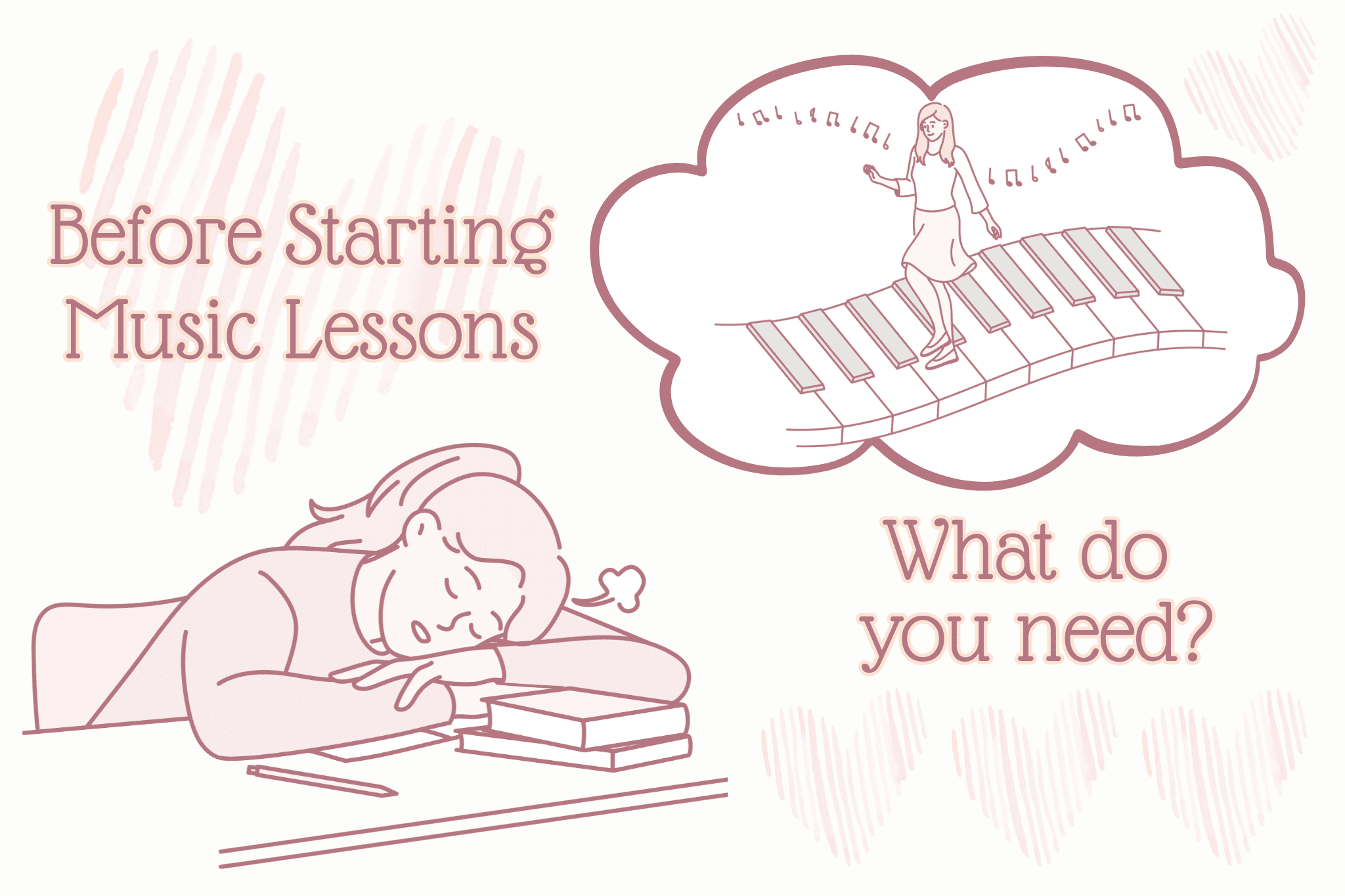
Perhaps you’ve been toying with the idea of learning a musical instrument. Typically, the first thing many people envision at the beginning of lessons is the end of the scenario…being able to play.
With that goal in mind, they will reach out to instructors like us to inquire or sign up for music lessons. If that’s you, there are a few things to know as you begin this new adventure in music learning.

Find an Instructor or Find Your Instrument? A Chicken or Egg Scenario
About half the time when someone reaches out to us regarding music lessons, they do not have a musical instrument yet. In fact, we’ve even had a few incidents in which someone came to their first lesson without an instrument. Either that, or they told us after a few lessons that they didn’t have a piano or keyboard in their home or access to a piano for practice between lessons.
This is not a great way to begin a musical journey, especially for young musicians. We strongly suggest finding your instrument before your first lesson.
Not sure where to even begin finding your new instrument? Ask an instructor. He or she may be helpful in locating an instrument, so you know what to rent or buy. Even if you’re not a beginner, your instructor can still prove helpful in finding you an intermediate level instrument when it’s time to upgrade.
When working with beginners, the instrument should be a quality instrument and not an instrument-shaped object (ISO). The best person to help you find this beginning instrument will be your local music store. They may have rentals as well as used or new instruments for sale. However, if they don’t have your instrument of choice (mandolin, accordion, lute, etc.) they will likely have connections to other local music shops with whom you can build a relationship to help you meet your musical goals.
From an instructor’s point of view, we prefer that our students have their instruments ready before starting lessons. As former instructors in a local music shop (and even, once upon a time, instrument rental professionals) we are more than happy to help answer questions.
At A Kopp Music, we rely on our music store and repair friends to help us with the most up-to-date information on what is currently available, so it makes a lot of sense to reach out directly to your local neighborhood music store. While it might feel like these shops are becoming few and far between, they still do exist and are happy to help you start your musical journey.
Set up For Success
Once you have your instrument, you’ll want to make sure you are set up not only for your lessons, but for regular practice between lessons.
Ask yourself:
- Do I have space to make noise?
- Do I have good seating for my instrument?
- Do I have a music stand that can hold my music properly for my playing position?
- If I’m taking lessons online, do I have the correct equipment to do so?
Once you can say “yes” to all these questions, you are ready to begin your music lesson journey.
Finding Your Music Instructor
There are many ways you can find music teachers for your instrument. Music stores and your local school music/band/orchestra teachers usually have connections to private music instructors in your area.
Local music lesson studios like ours not only have in-house instructors, but connections to other teachers outside of their organization to refer. Sometimes the musical instrument you have chosen is rare and there is no local music instructor that can meet your needs. That’s when it’s helpful to research online, not only for instructors but also a community for that instrument or instrument’s family which can be an important connection as well.
Take the Shakuhachi (pronounced “shaa-koo-HAA-chee”) for example. While Andy does teach the beginnings of the Shakuhachi from the initial point of making a sound, learning to read Kinko music notations, and early songs, at the time of writing this article, there are no Shakuhachi grand masters that we know of in the state of Minnesota.
Andy began learning Shakuhachi on his own twenty years before his first lessons with a professional Shakuhachi grand master. We found his first instructor while attending the World Flute Society Convention at the University of Eau Claire, WI, which is in a neighboring state to us here in Minnesota. Then we discovered the larger community and have since connected more to this group by way of summer camps and conferences.
Ready, Set … Let Go
You have your instrument, you are confident in your setup for both your lessons and daily practice at home, and you have an appointment for your first private lesson with an instructor! Fantastic!
The only thing left to do is communicate your goals and expectations to your instructor and then…learn to let them go. It’s your instructor’s job to help build out the adventure ahead of you with realistic goals and expectations to meet the milestones of skill building along the way.
With young students this is relatively easy because they tend to have limited expectations and are “professional students,” meaning that music lessons are really no different than their experience of learning in school. Typically with school-aged students, the expectations are more set on the parent’s end, especially if they had lessons themselves growing up. Some of these expectations might be that they really hope their child discovers the same passion that they have for music and music learning, which is the most challenging one to let go. Also, they may be surprised to learn that pedagogy and curriculum is different from their own experiences.
For adult students, this is the most difficult part of the process. Having to step back into the role of student is challenging because as adults we are already experts in our fields of choice. There is often a false notion that because we are adults, we are capable of learning more quickly and can more easily navigate novice to master level than our younger selves. The truth is, we still learn at similar rates as when we were young.
Unfortunately, expectations have a way of getting in the way of the learning process. The ultimate goal frequently sabotages the achievement of the many milestones along our path, and we fail to recognize them as the amazing celebratory steps that they are.
Additionally, as adults, we often view our instructors as something other than what they are — a friend, a boss, or an obstacle to be conquered. In truth, a music instructor is a mentor.
However, if you’re finding it difficult to connect with your instructor, it’s perfectly okay to transition to a different one. Finding the right fit is an important factor in being fully ready for music lessons and achieving success.
Don’t Fret Too Much
As adults, we tend to overthink things a bit. Yet the instinct to pursue this new and exciting musical journey can be powerful whether for yourself or for your child. Don’t fight it. Take some time to consider the steps we’ve outlined above and then go for it!
It’s like we always say here at A Kopp, “Have a Noisy Day!”
